
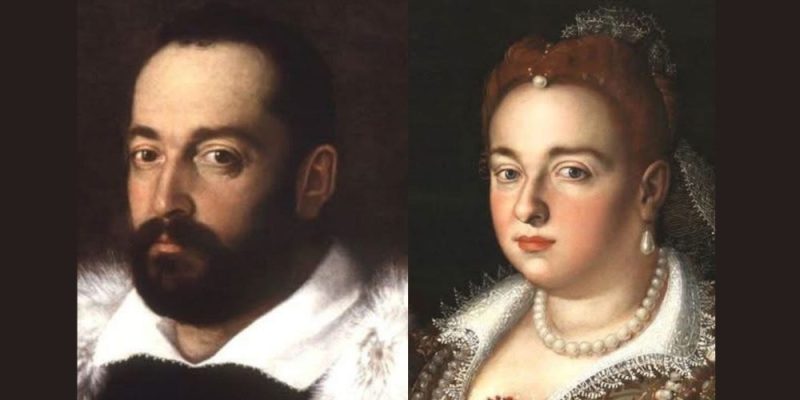
For more than four centuries, the sudden deaths of Grand Duke Francesco I de’ Medici and his wife, Bianca Cappello, have fueled one of Italy’s most debated historical mysteries.
The influential Medici family ruled Florence and much of Tuscany for generations, and the couple’s deaths in 1587 sparked immediate claims of political murder. While arsenic poisoning remained a popular theory for decades, new genetic research now offers compelling scientific evidence that malaria was present in Francesco’s body.
Although the findings do not completely rule out poisoning, they provide the strongest evidence yet that a deadly mosquito-borne disease played a major role in one of the Renaissance's most famous unsolved cases.
A Death That Changed Medici History
Grand Duke Francesco I de’ Medici and Bianca Cappello died only hours apart after suffering several days of severe illness in October 1587. Contemporary records describe recurring fever, intense discomfort, and a gradual decline before both passed away.
At the time, physicians believed malaria was the likely cause because the symptoms closely matched the disease. Even so, suspicion quickly shifted toward murder. Many believed Francesco’s younger brother, Ferdinando de’ Medici, had arranged their deaths to secure the throne.
He stood next in line for the throne. His position, however, could have faced a challenge from Francesco’s illegitimate son, Antonio. Historical records also mention that Ferdinando visited the couple shortly before they became sick. That visit strengthened claims that he poisoned them with arsenic to secure power.
The deaths occurred at the Medici villa in Poggio a Caiano, near Florence. During the sixteenth century, the surrounding marshes and rice fields created ideal breeding grounds for mosquitoes that carried malaria. Despite that environmental risk, the family's history of rivalries and assassination attempts kept the murder theory alive for centuries.
Scientific Investigation Reopens the Case
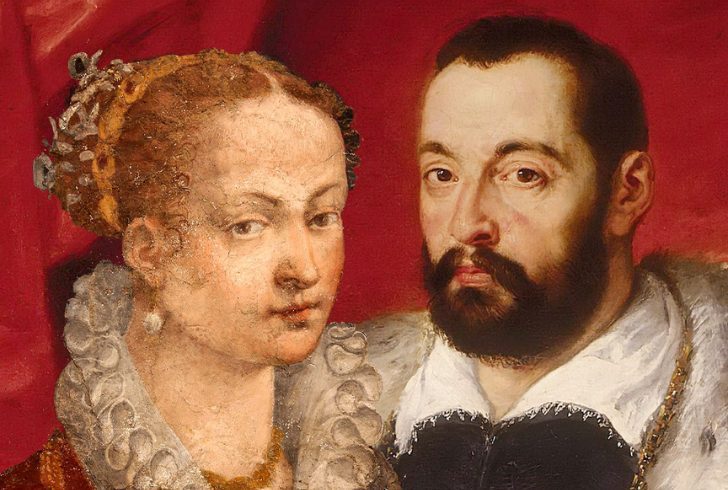
Instagram | cittadifirenzeufficiale | In October 1587, Grand Duke Francesco I de’ Medici and Bianca Cappello died hours apart from a sudden, fatal fever.
The long-running debate gained new attention after the Medici Project began examining the remains of 49 members of the Medici family in 2004. Early studies identified evidence consistent with malaria, while toxicological research published in 2006 suggested arsenic poisoning may have caused the couple's deaths.
The conflicting conclusions left historians and scientists divided.
A new study published in June in the journal iScience aimed to settle the question using advanced ancient DNA technology. The research was led by Serena Tucci, assistant professor of anthropology at Yale University's Faculty of Arts and Sciences, and conducted jointly by Yale University and the University of Pisa.
Researchers extracted DNA from skeletal remains belonging to Francesco and his younger brother, Cardinal Giovanni de’ Medici. Unlike earlier techniques, ancient DNA testing searches directly for genetic material left behind by infectious organisms, making it a much more reliable method than previous laboratory approaches.
Ancient DNA Provides Strong Evidence
Valentina Giuffra, professor of the history of medicine at the University of Pisa and co-author of the study, explained why the latest analysis carries greater scientific weight.
"In recent years, we tried to solve this mystery by performing some specific analysis, in particular paleo-immunological analysis, which attested to the presence of malaria in the remains. But the rumors would not stop, because paleo-immunology is not resolutive, and only ancient DNA could give an answer with a high degree of certainty."
Earlier research relied on paleo-immunology, which searches for proteins or antigens left behind by disease. Ancient DNA analysis identifies the actual genetic signature of the pathogen itself.
The research team discovered genetic traces of Plasmodium, the parasite responsible for malaria, inside bone samples taken from Francesco's ribs.
Giuffra summarized the findings by stating:
"DNA is certain. It solves the problem and the doubts. I think this is a definitive answer."
The results strongly indicate that Francesco was infected with malaria before his death.
Two Malaria Parasites Found
The study revealed another important discovery. Francesco's remains contained evidence of two separate malaria parasites—Plasmodium falciparum and Plasmodium malariae.
Researchers believe this dual infection may have made the illness significantly more severe.
The same investigation also examined the remains of Cardinal Giovanni de’ Medici, who died 25 years earlier after returning from Tuscany's coastal region. Scientists detected malaria in Giovanni as well, identifying a previously unknown strain of Plasmodium falciparum.
According to Giuffra, both brothers had traveled to areas where malaria was widespread.
"Francesco and Giovanni, a young member of the family, both traveled 25 years apart to areas of Tuscany which were known for malaria."
She also explained that court physicians had warned members of the Medici family against traveling during autumn because malaria infections were especially common during that season.
"The court physicians tried to discourage some members of the Medici family from doing these trips, especially in autumn, which was a season particularly favorable for malaria. But they went anyway, and a few days after the trip, they began to develop the first symptoms, including an intermittent fever, which is associated with malaria infection."
Why the Discovery Matters
Malaria remains one of humanity's deadliest infectious diseases. According to the World Health Organization, the disease caused approximately 610,000 deaths worldwide in 2024.
The disease causes fever, chills, headaches, and repeated cycles of illness. Its name comes from the medieval Italian phrase mal aria, which means "bad air." People once believed foul-smelling air from swamps caused the disease. Scientists later discovered that mosquitoes spread the infection.
Historical records from Medici court physicians closely match modern descriptions of malaria. Documents describe recurring fever and treatments such as bloodletting, a common medical practice at the time that removed blood from patients. Modern medicine recognizes that bloodletting often weakened patients instead of helping them recover.
Scientists completed the DNA testing with small bone samples saved after the Medici tombs were opened in 2004. Researchers could not perform this type of analysis at that time because the technology had not yet advanced enough.
Alexander Ochoa, associate research scientist at Yale and first author of the study, said the findings also improve scientific understanding of malaria's history.
"Our study contributes to filling a historical gap for a time, Renaissance, and space, Central Italy, from which very limited information about the evolution and spread of malaria exists."
Could Poison Still Have Played a Role?
Although the DNA evidence strongly supports malaria infection, researchers acknowledge that it cannot completely eliminate the possibility of poisoning.
When asked whether Francesco might still have been poisoned, Ochoa responded:
"Perhaps not, but the genetic evidence presented in our study decreases the margin for speculation."
Study co-author Gisella Caccone, senior research scientist at Yale, offered a similar assessment.
"We can say that they had malaria, we cannot say that they were not poisoned as well."
She added that historical evidence already suggested the couple had traveled through malaria-infested regions of southern Tuscany. If poisoning occurred alongside the infection, proving it centuries later would remain extremely difficult.
Why Some Experts Disagree

lanazione.it | Historian Donatella Lippi believes Francesco died of arsenic poisoning, citing Vatican records of his symptoms.
Some historians continue to support the poisoning theory.
Donatella Lippi, professor of the history of medicine at the University of Florence and co-author of the 2006 study, believes arsenic caused Francesco’s death.
She pointed to Vatican Library records that describe fever, swelling, and skin eruptions. Those symptoms can also appear in cases of acute arsenic poisoning.
Lippi said:
"Contracting malaria does not mean dying from it, and this research supports what I have always maintained."
She also added:
"I believe Francesco I suffered from malaria, but he was poisoned and died of poison. His tomb was opened 300 years after his death; his hands were contracted as if in the throes of agony, and the body was well preserved—arsenic could explain both."
Giuffra disagreed with that interpretation. She explained that Lippi based her conclusions on biological tissue believed to belong to Francesco's organs rather than samples collected directly from his skeletal remains. Giuffra also noted that Francesco practiced alchemy and frequently handled chemical substances. Those activities could explain reports of skin damage.
Independent researchers welcomed the new study but advised caution.
Anne Stone, Regents Professor in the School of Human Evolution and Social Change at Arizona State University, described the research as valuable for both history and ancient disease studies. She believes malaria likely caused the deaths but said additional toxicology tests would help answer the poisoning question.
David Caramelli, professor of anthropology at the University of Florence, also praised the research. He noted that finding pathogen DNA does not automatically prove the exact cause of death. He said historians should combine genetic, archaeological, medical, and historical evidence before reaching a final conclusion.
What the Latest Evidence Suggests
The latest DNA research offers the strongest scientific evidence yet in the Medici death mystery. Researchers confirmed that Francesco I de’ Medici carried two malaria parasites before his death. They also found malaria in the remains of his brother, Giovanni. These discoveries support the idea that malaria caused the illnesses that claimed their lives.
At the same time, the study does not completely dismiss the possibility of arsenic poisoning. The debate may continue, but modern DNA analysis has shifted the discussion toward scientific evidence instead of centuries-old speculation.