
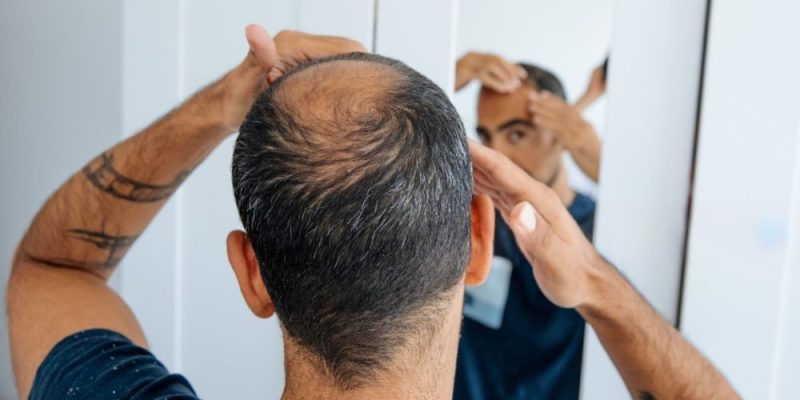
Hair loss affects millions of people, often influencing confidence, self-image, and daily life. In the United States alone, around 50 million men and 30 million women experience androgenic alopecia, commonly known as pattern baldness. Research has also linked this condition to reduced quality of life and increased emotional stress.
While treatments such as hair transplants, topical products, and prescription medications remain common, scientists are continuing to search for safer and more effective options. A recent scientific review suggests that one possible answer may come from an herbal remedy that has been used for centuries.
Researchers believe that Polygonum multiflorum, better known as Fo Ti, contains compounds that may support hair growth through several biological pathways. Although the findings are encouraging, experts also stress that more human studies are needed before the root can be considered a standard treatment.
A Traditional Root Gains Attention
A scientific review published in December 2025 in the Journal of Holistic Integrative Pharmacy examined the potential of Polygonum multiflorum, also called Chinese climbing knotweed or Fo Ti, as a natural option for hair loss.
The research team, made up of scientists from across China, analyzed years of evidence, including laboratory studies, clinical reports, and historical herbal records. They also compared ancient medical descriptions with current knowledge of hair biology.
For generations, Fo Ti has been used in traditional Chinese medicine for conditions such as hair thinning, premature graying, tuberculosis, erectile dysfunction, and several other health concerns. Native to China, the plant is also cultivated in other regions, including parts of the United States.
Traditionally, the root is processed before use and prepared as teas, tonics, ointments, or herbal tablets.
How Fo Ti May Support Hair Growth

Instagram | webmd | Fo Ti supports hair health through the combined action of compounds like emodin, physcion, and TSG.
According to the review, Fo Ti contains several naturally occurring compounds that appear to work together instead of relying on a single active ingredient. Researchers focused on emodin, physcion, and TSG, each of which may contribute differently to hair health.
Laboratory findings suggest that emodin and physcion may help maintain darker, healthier-looking hair while supporting hair follicle health. Meanwhile, TSG showed particularly promising results in animal studies. In experiments involving mice, researchers observed significantly greater hair growth and longer hair compared with untreated groups.
The review also explains that Fo Ti may:
- Stimulate important signaling pathways involved in hair growth.
- Help prevent hair follicles from entering premature cell death.
- Improve blood circulation to the scalp, creating a healthier environment for growing hair.
Because these effects occur through multiple biological mechanisms, researchers describe the plant as having a "multi-component, multi-target, multi-pathway" approach. This resembles the direction many modern precision medicine strategies are taking.
Ancient Records Match Modern Biology
One of the review's most interesting findings involves the consistency between historical herbal texts and current laboratory research.
Bixian Han, the review's first author, explained in a press statement:
"Our analysis bridges ancient wisdom and modern science. What surprised us was how consistently historical texts—from the Tang Dynasty onward—described effects that align perfectly with today's understanding of hair biology. Modern studies now confirm that this isn't folklore; it's pharmacology."
The researchers believe these historical records may contain valuable observations that warrant careful scientific evaluation rather than being dismissed as traditional folklore.
Safety Questions Require Careful Study
Although Fo Ti showed encouraging results in research, scientists caution against viewing it as a proven replacement for current hair loss medications.
The review notes that Fo Ti may avoid some common side effects associated with treatments such as minoxidil and finasteride, including scalp irritation and sexual side effects. Researchers describe the herb as generally mild in many traditional applications.

Pexels | Fo Ti may be a low-side-effect alternative for hair loss, but science hasn't confirmed it can replace conventional treatments.
At the same time, published medical reports have linked Fo Ti to cases of liver injury in previously healthy individuals. According to the authors, these incidents may have been associated with improper processing methods or individual genetic susceptibility.
Because of these concerns, the researchers recommend standardized preparation methods, controlled clinical settings, and precision-based treatment strategies. Large-scale human clinical trials remain necessary before Fo Ti can be widely recommended for treating androgenic alopecia.
New Research Continues to Build Evidence
Interest in Fo Ti has continued beyond the 2025 review.
Four months later, an independent research team in South Korea studied Polygonum multiflorum using dermal papilla cells. These cells sit at the base of hair follicles and help control hair growth. The team published its findings in the peer-reviewed journal Frontiers in Physiology.
Instead of examining the entire plant, the researchers focused on plant-derived vesicles. These tiny natural carriers transport bioactive compounds between cells. The study found that the vesicles significantly increased the elongation of human hair follicles during ex vivo testing. The results suggest that they may support the active hair growth phase.
The study took place outside the human body, so the findings cannot confirm how the treatment works in people. Even so, the results provide additional scientific evidence and support more research into the plant's effects on hair follicles.
Fo Ti has attracted scientific interest because it appears to influence several biological processes linked to hair growth. Evidence from historical records, laboratory studies, animal research, and cell-based experiments supports continued investigation.
However, current clinical evidence is still limited. Researchers must complete larger, well-controlled human trials to confirm its effectiveness, identify the proper dosage, and evaluate its long-term safety.