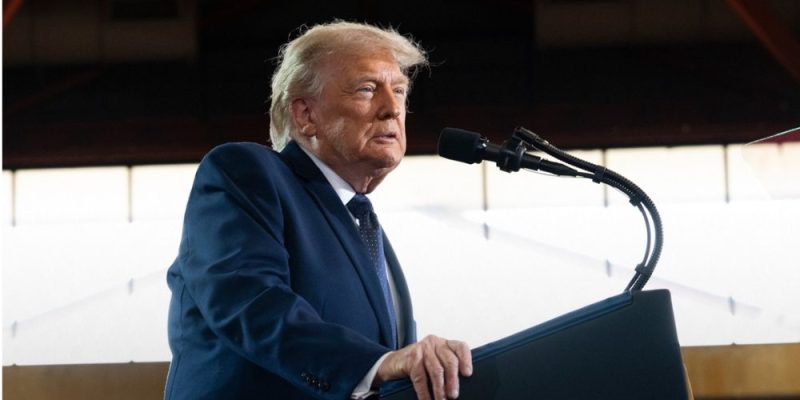
Public appearances by President Donald Trump have once again fueled debate about his health and cognitive condition.
The discussion gained fresh attention after the G7 summit in Évian-les-Bains, France, where video clips showed Trump briefly moving away from a group of world leaders before being guided back.
While the White House continues to insist that the president remains in excellent health, critics and medical commentators argue that recent incidents raise legitimate questions about his physical and mental fitness.
G7 Footage Sparks New Debate
The latest controversy emerged during an official event at the G7 summit. Video footage appeared to show Trump separating from other leaders and looking around before returning to the group. Shortly afterward, he gave a thumbs-up gesture toward cameras and rejoined the gathering.
The clip spread rapidly across social media platforms. Critics suggested the moment reflected confusion or disorientation. Others argued that the footage lacked context and showed nothing more than a brief misunderstanding during a busy diplomatic event.
Regardless of interpretation, the incident attracted significant attention because it occurred at one of the year's most closely watched international meetings. As a result, discussions about Trump’s health quickly returned to the national spotlight.
Medical Commentators Raise Concerns
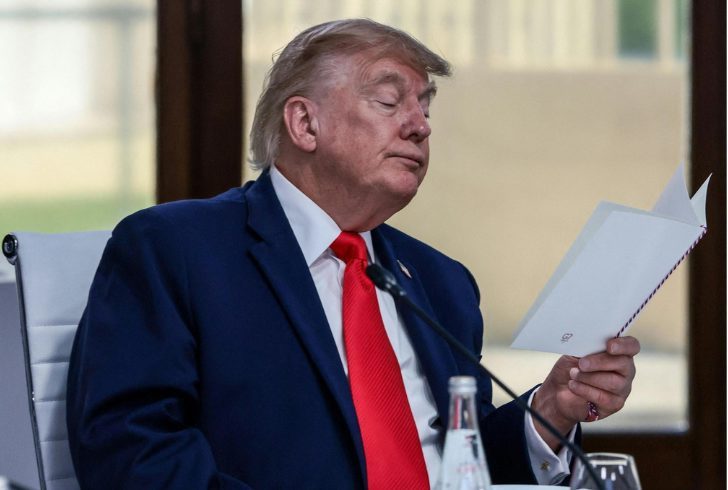
Instagram | afpnewsagency | Trump's recent G7 appearance has become the latest flashpoint in the ongoing debate surrounding his cognitive health.
Among those commenting on Trump’s health is Dr. John Gartner, a former professor at Johns Hopkins University Medical School. Gartner has questioned the purpose of Trump’s regular cognitive screenings, arguing that the tests may be intended to measure changes over time rather than simply identify potential cognitive issues.
According to Gartner, repeated testing can sometimes help track progression if concerns already exist. He also noted that individuals who take the same assessment multiple times may become familiar with the format and questions, potentially improving their scores through repetition rather than reflecting actual cognitive performance.
These claims have generated discussion online. However, no official evidence has been released to support Gartner’s conclusions.
Claims of Possible Neurological Symptoms
Adam James, a physiotherapist known for sharing health-related observations on social media, has also weighed in on the debate. James pointed to several physical characteristics that he believes could be consistent with a neurological event.
He cited Trump’s posture, what he described as right-sided facial asymmetry, and occasional speech difficulties. James connected these observations to the BE FAST framework, a widely recognized method used to identify possible stroke symptoms and determine when urgent medical attention may be needed.
At the same time, James emphasized an important limitation. He has never personally examined the president, and no formal diagnosis has been made. His comments remain observational rather than clinical conclusions.
Age and Fitness Remain Political Issues
Questions about age and cognitive fitness have become a recurring theme in American politics. The issue dominated discussions surrounding both Donald Trump and former President Joe Biden during recent election cycles.
For years, Trump frequently referred to Biden as “Sleepy Joe” while questioning his ability to serve. More recently, critics have highlighted instances in which Trump appeared drowsy during televised Oval Office meetings, creating a reversal of the political narrative.
The broader debate extends beyond any single politician. Many voters value experience in elected officials, yet that preference has contributed to a political system where numerous senior decision-makers are well into their seventies and eighties.
Critics argue that age-related concerns deserve closer examination, particularly when public officials hold positions with significant national and international responsibilities.
Additional Observations From the Summit
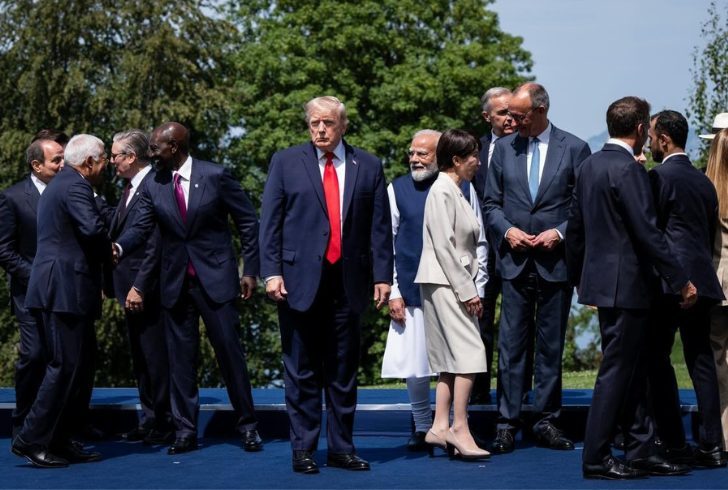
Instagram | haiyunjiang | Observers noted a stark contrast in Trump’s G7 behavior, highlighting his lack of notes and independent movements.
Several commentators also focused on Trump’s behavior throughout the G7 conference. During televised meetings, he reportedly stood out as the only leader who did not appear to reference notes. Observers noted that no documents or briefing materials were visible in front of him.
Video clips also showed Trump moving independently during and after official photo sessions. Another widely discussed moment involved the president taking the hand of France’s First Lady, Brigitte Macron.
Online speculation followed, with some commenters suggesting that Trump may have mistaken Macron for a staff member or aide. These interpretations remain speculative and have not been supported by official sources.
Additional reports citing anonymous White House sources have also circulated. According to those claims, Trump prefers information to be rewritten into formats that are easier for him to process and reportedly relies heavily on aides when moving around the White House. These reports remain unverified.
No official medical diagnosis has been released to support claims that Donald Trump is experiencing cognitive decline. The White House continues to state that he remains healthy and capable of performing presidential duties.
Despite those assurances, recent appearances, including the G7 summit, have intensified public discussion about his health. Commentary from medical observers and ongoing debate over cognitive assessments continue to keep the issue in focus, making it a recurring topic in the national political conversation.